
Lockbolt Fasteners: How They Work and Why They Last
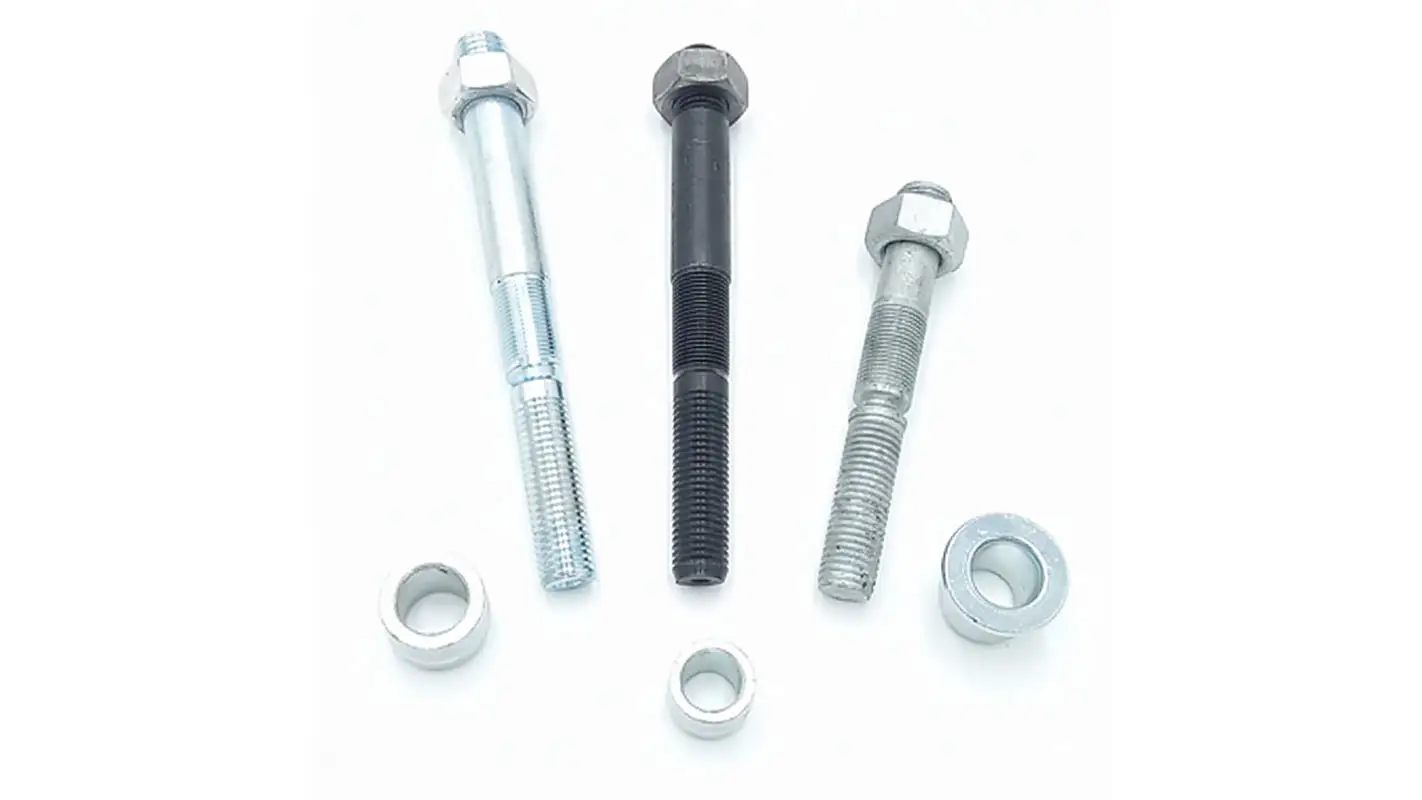
In short: A lockbolt is a pin and a collar swaged together to give a permanent, consistent clamp force. It cannot vibrate loose like a nut and bolt, which is why it is used on trucks, rail, mining equipment and steel structures.
See: Heavy Engineering, ToolingTalk to our technical team
A lockbolt is a high-strength, two-piece fastener made up of a hardened pin and a metal collar. During installation the collar is swaged, or pressed, into grooves on the pin, creating a permanent joint with a precise, consistent clamp force. Lockbolts combine the strength of a bolt with the permanence of a rivet, and they are the fastener of choice wherever joints must survive heavy loads and constant vibration.
How a lockbolt is installed
- The pin is pushed through the prepared hole and the collar is slipped over it.
- A lockbolt installation tool grips the pintail and pulls, drawing the joint tightly together.
- The tool’s nose assembly is then driven down over the collar, swaging it into the pin’s locking grooves. As the collar is compressed its diameter shrinks and it lengthens, which stretches the pin and puts a clamping force across the joint.
- Depending on the design, the pintail breaks off or the tool releases, leaving a finished fastener.
Because the clamp force comes from the swaging process rather than from tightening a thread, every lockbolt is installed to the same, predictable preload.
What determines a lockbolt’s strength
- Shear strength depends on the pin’s minimum diameter and the strength of its material. A larger diameter or a stronger grade increases it.
- Clamp force (preload) comes from the collar being swaged onto the pin, and stays stable over time because there is no thread to work loose.
- Tensile strength depends on the collar material and the number of pin grooves it fills.
Why lockbolts outlast nuts and bolts
- Vibration resistance. A nut and bolt relies on friction in the thread to stay tight, and vibration can gradually loosen it. A swaged collar cannot rotate, so a lockbolt does not loosen. That is why lockbolts are used on railway wagons, trailers, bridges and mining equipment, where loose bolts would mean constant checking and retightening.
- Consistent clamp force. Torque-tightened bolts vary with thread condition and lubrication. Lockbolts deliver the same preload every time, which gives a longer fatigue life.
- Permanent and tamper-resistant. A lockbolt cannot be undone with a spanner; it has to be cut off. That suits joints where security matters.
- Fast, easy inspection. Installation is quick and quiet, needs no torque checks, washers or lock nuts, and a correctly installed collar is easy to verify visually.
Hydraloc and other lockbolt types
Avlock’s heavy engineering range includes several lockbolt systems:
- Hydraloc “T”® pin and collar: a large-diameter, high-tensile (grade 8.8) lockbolt for heavy structural joints. It is an alternative to welding, solid riveting or threaded fasteners where very high strength is needed, with joint strengths in excess of 300 kN.
- Multi-grip and C106 pin and collar fasteners for a range of material thicknesses.
- Avtainer®, Avbolt®, Avdelok® and Maxlok® structural fasteners for vibration-prone assemblies.
Larger lockbolts are installed with hydraulic tooling, such as Avlock’s Hydrafast tools and Hydrapac® power units, available from the tooling range.
Where lockbolts are used
- Truck, trailer and bus body building
- Railway wagons and rolling stock
- Mining and earth-moving equipment, conveyors and screens
- Steel structures, bridges and cranes
- Agricultural and heavy industrial machinery
If a joint has to stay tight under vibration and heavy load without maintenance, a lockbolt is usually the right answer. Avlock’s technical team can help select the pin, collar and tooling for your application.