
Rivets Explained: Blind Rivets, Pop Rivets and How They Work
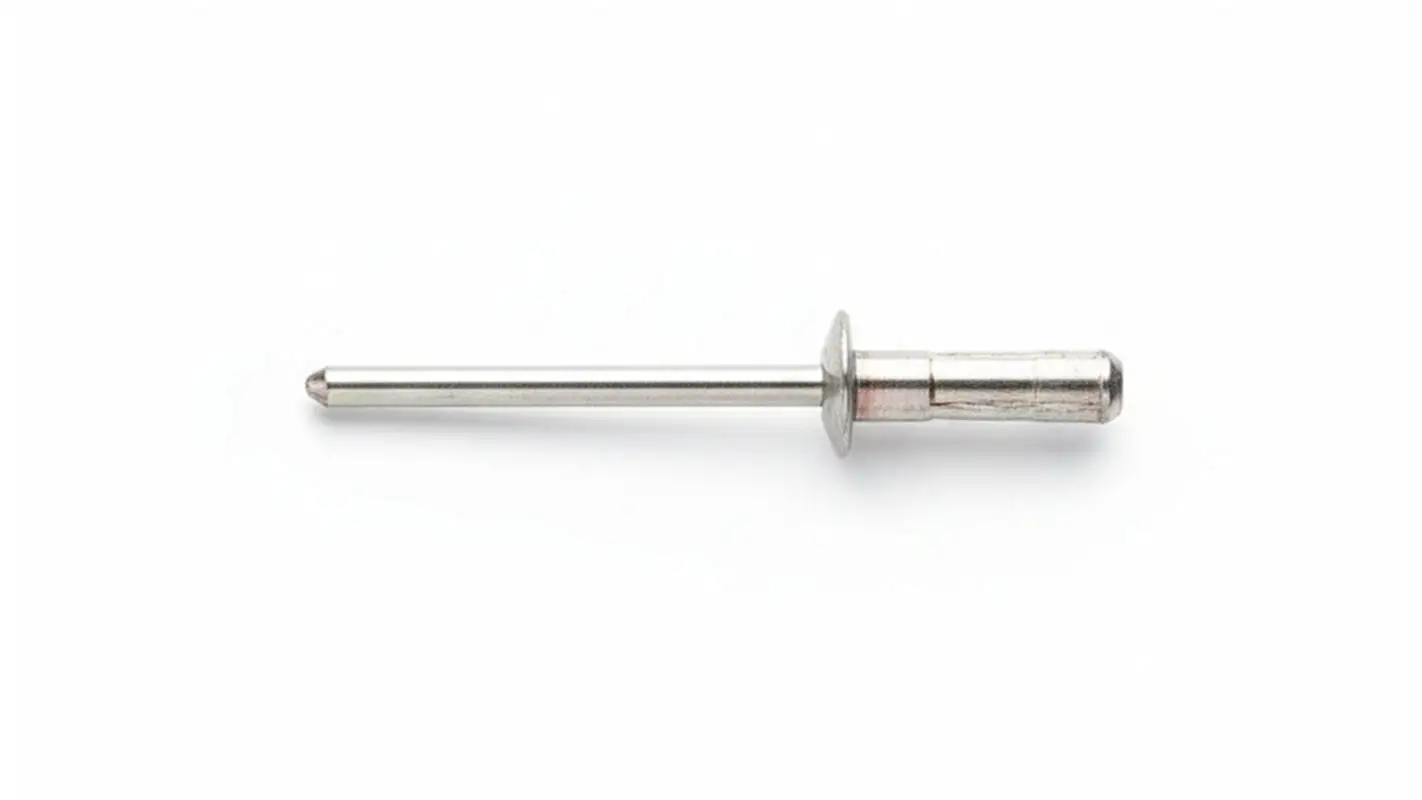
In short: A rivet is a permanent fastener that is deformed on the far side of a joint so it cannot pull out. Blind (pop) rivets are installed from one side only, and the right type depends on the material, thickness and load.
See: Light Engineering, ToolingTalk to our technical team
A rivet is a permanent mechanical fastener. It joins two or more parts by passing through a drilled or punched hole and being deformed on the far side, so it cannot pull back out. Rivets have been used for thousands of years, and the principle has hardly changed. What has changed is the range: today’s rivets come in many materials, head styles and designs, each suited to different materials and loads.
How a rivet works
Before installation, a traditional rivet is a smooth cylindrical shank with a head on one end. The other end is called the tail. The rivet is pushed through the hole and the tail is upset, or “bucked”, so that it spreads to roughly one and a half times the original shank diameter. That forms a second head, and the rivet now holds the parts together much like a dumbbell.
The original head is called the factory head and the formed end the shop head or buck-tail. Because both ends are now heads, a rivet can resist tension. It is, however, far stronger in shear, the load that acts across the shank, which is why rivets are used so widely in structures, vehicles and sheet-metal assemblies.
Solid rivets and blind rivets
Solid rivets need access to both sides of the joint: one side to hold the head, the other to form the shop head. They are still used where maximum strength and a traditional finish matter. Avlock supplies solid and semi-tubular rivets for these applications.
Blind rivets solve the access problem. They are installed entirely from one side, which makes them ideal for hollow sections, closed panels and assemblies where the back is out of reach. This is the main reason blind rivets have become the standard choice in manufacturing and assembly.
What is a pop rivet?
“Pop rivet” is the common name for a blind rivet. A blind rivet has two parts:
- The rivet body (or shell), which stays in the joint.
- The mandrel (or stem), a pin that runs through the body.
The rivet is placed in the hole and a riveting tool pulls the mandrel back. The mandrel’s head draws into the body and expands it on the blind side, clamping the parts together. At a set load the mandrel breaks off, leaving a neat, permanent joint. Only a small area around the hole is affected, so the surrounding material is not distorted.
Choosing the right blind rivet
Different jobs call for different designs. Avlock’s Breakstem® fastener range includes:
- Multi-grip rivets, which cover a wide range of material thicknesses with one size. They are the general-purpose choice for most assembly work.
- Sealed rivets, which close the mandrel end to keep out water, air and dust.
- Peel rivets, which split into petals on the blind side, spreading the load over soft or brittle materials such as wood, plastics and fibreglass.
- Bulbex® rivets, which form a large bulb on the blind side for thin sheet and slotted or oversized holes.
- Structural rivets such as Monobolt®, for joints that must carry higher shear and tensile loads and resist vibration.
The right choice depends on the materials being joined, their combined thickness (the grip range), the load the joint must carry, and the environment it works in. Matching the rivet material to the parts being joined also matters, to avoid corrosion between dissimilar metals.
Rivet nuts: when you need a thread
Sometimes a joint needs a thread rather than a permanent rivet, for example to fix a panel that must later be removed. A rivet nut (also called a rivnut or blind rivet nut) is installed from one side like a blind rivet, but leaves a strong internal thread in thin material. Avlock supplies rivnuts in steel, stainless steel and aluminium, with hand and pneumatic installation tools.
Summary
Rivets give permanent, vibration-resistant joints that are quick to make. Solid rivets need access to both sides; blind (pop) rivets need only one, and the right blind rivet design depends on the material, thickness and load. If you are unsure which suits your application, Avlock’s technical team can recommend the fastener and the tooling to install it.