
Rivet Nuts (Rivnuts): Uses and Benefits
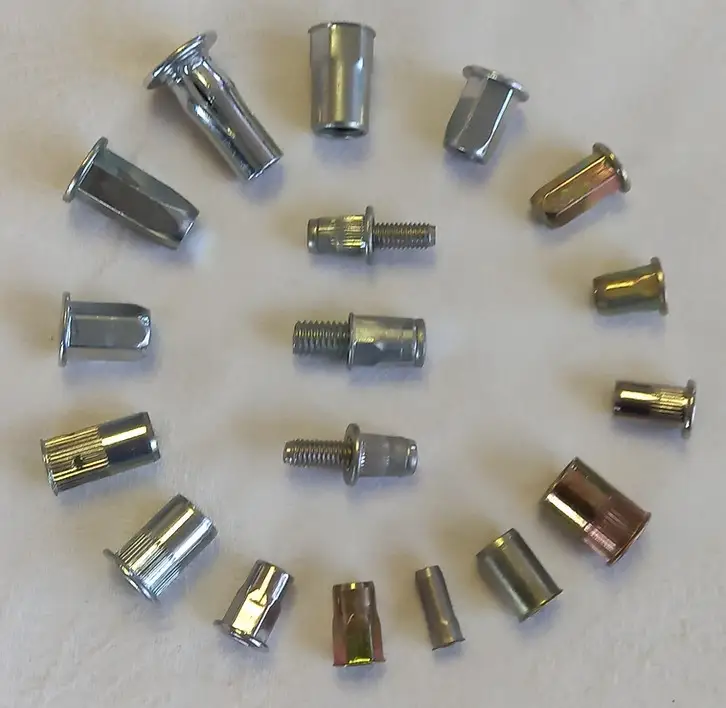
In short: A rivet nut adds a strong internal thread to thin material, installed from one side like a blind rivet. It lets parts be bolted on and removed again where a nut can't be reached or the material is too thin to tap.
See: Light Engineering, ToolingTalk to our technical team
Sheet metal and tubing are often too thin to hold a tapped thread, and the back of the panel is often out of reach for a nut. A rivet nut, also called a rivnut, blind rivet nut or nutsert, solves both problems.
What is a rivet nut?
A rivet nut is an internally threaded tube with a flange at one end. It is placed in a drilled hole and installed from one side: the tool draws the thread back, so the body collapses and grips the material from behind. The result is a permanent, load-bearing thread that a bolt or screw can be fitted to, and removed from, repeatedly.
Why use rivet nuts?
- One-sided installation: ideal for tubes, box sections and closed panels.
- Strong threads in thin material: much stronger than threads tapped into thin sheet.
- Removable parts: panels, brackets and fittings can be taken off and refitted.
- Clean and quick: no welding, no heat distortion and no damage to coatings.
- Works in many materials: steel, aluminium, plastics and composites.
Where they are used
Vehicle bodies and trailers, electrical enclosures, furniture, appliances, solar mounting, HVAC and general sheet-metal fabrication.
Choosing and installing
Choose the material (steel, stainless steel or aluminium), the thread size, the head style and the grip range to suit the job. For occasional use, a hand rivnut tool is enough; for production, a pneumatic tool such as the ProSert XTN 20 is faster and more consistent.
Avlock supplies rivnuts and the tools to install them. See also Rivets Explained.